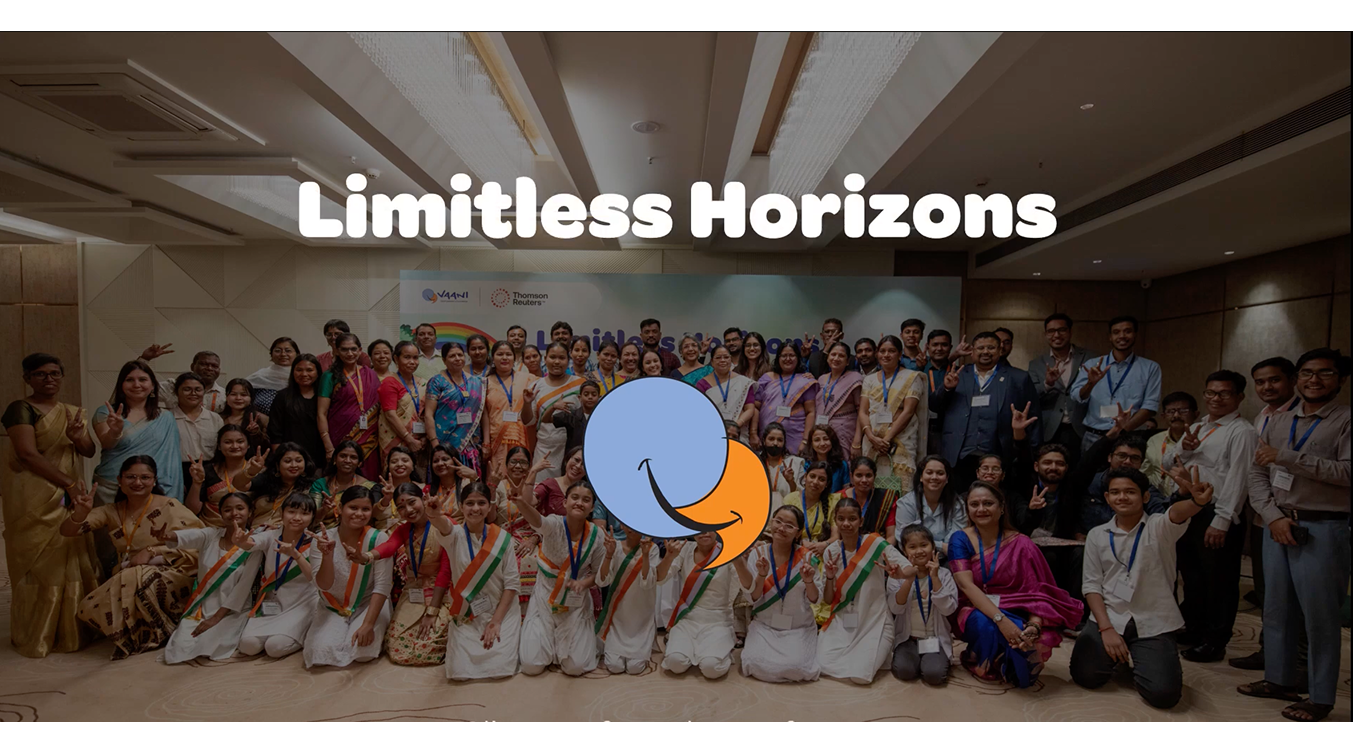
On 21 February 2026, VAANI Deaf Children’s Foundation hosted the National Conference “Limitless Horizons” at Novotel, Guwahati, bringing together parents, educators, health professionals, government representatives, development partners, and advocates committed to creating a more inclusive future for Deaf and Hard of Hearing children and youth.
Supported by Thomson Reuters, the conference served as a powerful platform for dialogue, learning, and collaboration. It reinforced a shared belief that when families, communities, institutions, and systems work together, every deaf child can thrive and achieve their full potential.
A Gathering of Voices That Matter
The conference witnessed participation from senior representatives of the Departments of Health and Education, professionals working in disability inclusion, experts in early intervention and inclusive education, corporate leaders, parents, and Deaf youth. Their collective experiences and insights enriched the conversations and highlighted both the challenges and opportunities that exist in building inclusive ecosystems.
Throughout the day, discussions focused on strengthening support systems across the life cycle of a deaf child—from early identification and intervention to education, higher education, and employment.
Early Identification: The Foundation for Better Outcomes
Mr Nitin Sisodia from SOHUM Innovation Lab highlighted the critical importance of early hearing screening and intervention. He shared how low-cost newborn hearing screening technology can help identify hearing loss at an early stage, enabling timely support and significantly improving developmental outcomes.
His session emphasised the importance of strengthening referral pathways and empowering parents to become active participants in their child’s early intervention journey.
Responsive Parenting and Inclusive Education
Dr Varsha Gathoo introduced participants to the concept of the “3Rs” of responsive parenting, while advocating for child-centred learning approaches and Universal Design for Learning (UDL). Drawing from the principles of the National Education Policy (NEP) 2020, she highlighted how inclusive educational environments can support diverse learners and create meaningful learning experiences for Deaf children.
Her session reinforced the idea that parents and educators play an equally important role in helping children develop confidence, communication, and a love for learning.
Parents as Changemakers
Ms Brinda Crishna and Ms. Inky Sen highlighted how parental support and community awareness can transform deaf children’s educational and career journeys and provide them with social and emotional support.
Most importantly, they demonstrated how parents can become powerful advocates for their children and for the wider Deaf community.
Their experiences resonated deeply with participants and served as a reminder that empowered parents are often the strongest drivers of change.
Expanding Horizons for Deaf Youth
As children grow, the need for pathways beyond school becomes increasingly important. Addressing this critical transition, Mr Aman Sharma explored opportunities in higher education, skills development, and employment for Deaf youth.
His session challenged traditional perceptions about disability and employment while showcasing examples of Deaf individuals succeeding across professional sectors. The discussion encouraged stakeholders to think beyond basic inclusion and focus on creating meaningful opportunities for long-term independence and career growth.
The Role of Corporate India
Representing Thomson Reuters, Ms Ashika G spoke about the importance of purposeful corporate engagement in the disability sector. She highlighted the need for stronger investments in the Northeast and encouraged partnerships that move beyond compliance-based CSR approaches toward sustainable, community-led impact.
Her address underscored how collaboration between civil society, government, and the corporate sector can accelerate inclusion and create systemic change.
Celebrating Confidence, Talent, and Inclusion
A special highlight of the event was a cultural performance by Deaf children. Through dance, expression, and visual storytelling, the children showcased their talents, confidence, and creativity, receiving enthusiastic appreciation from the audience.
The performance served as a powerful reminder that disability does not limit potential; rather, it is access and opportunity that make the difference.
Looking Ahead
As the conference concluded, one message stood out clearly: inclusion is not the responsibility of one stakeholder alone—it is a collective effort.
“Limitless Horizons” reaffirmed the importance of early identification, family empowerment, inclusive education, youth development, and cross-sector collaboration. It strengthened the commitment of all participants to continue building systems where Deaf and Hard of Hearing children can learn, communicate, participate, and succeed with dignity.
At VAANI, we remain committed to creating these pathways and ensuring that every Deaf child is given the opportunity to dream, achieve, and lead a fulfilling life.
Because when families, communities, institutions, and systems come together, there truly are no limits to what a child can achieve.